The Second Classroom: Where the Rehearsal for Life Begins
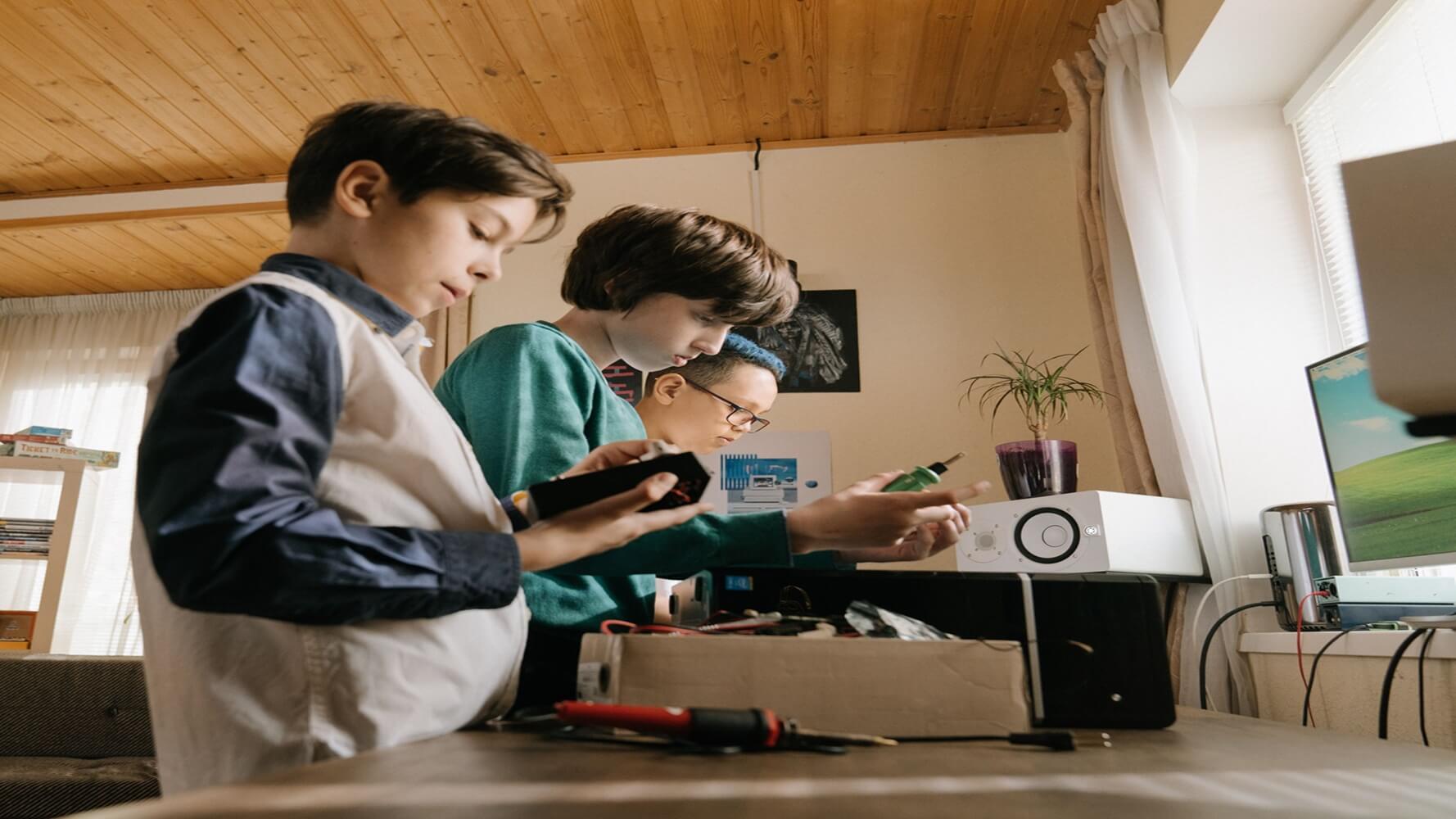
Some of the Most Important Lessons Your Child Learns Won’t Be Taught in a Classroom
School-going students spend thousands of hours in classrooms learning mathematics, languages, science, history, and other important subjects. But some of the lessons that may shape their lives the most are unlikely to appear on an examination paper.
What do you do when someone disagrees with you?
How do you respond when your team loses?
How do you handle being left out?
Can you take instructions from someone you don’t particularly like?
How do you speak up without being disrespectful?
What do you do when your friends pressure you to do something you know you probably shouldn’t?
These lessons often surface in what we might call the second classroom: extracurricular activities (ECA), or in Singapore schools known as co-curricular activities, or CCAs.
The second classroom may be a football field, rehearsal room, debate stage, robotics lab, uniformed group, student council meeting, or community project.
The second classroom is unlike the usual classroom, where variables and people are less controlled. In this classroom, students learn what it feels like to be chosen—and overlooked. They discover whether they can stay composed when a teammate makes a mistake, accept feedback they do not enjoy, contribute without receiving the credit, and return after a disappointing performance. They begin to understand that effort does not always produce an immediate reward and that other people may see the same situation differently.
The first classroom helps children acquire knowledge. The second gives them opportunities to practise using what they know amid people, pressure, uncertainty, and responsibility. One should not replace the other. Together, they provide a fuller preparation for life, for they will encounter versions of them throughout school, relationships, and eventually working life.
Another Classroom Outside the Classroom
While the purpose of ECA is to provide students a more holistic education by exposing them to disciplines beyond academics. ECA could also be a classroom of sorts for students to learn how to navigate people, situations, choices, and consequences.
Consider what happens when a child joins a football team. On the surface, the child is learning football. Look a little deeper. The child may also be learning to arrive on time, listen to instructions, cooperate with teammates, manage frustration, compete fairly, and continue trying after losing.
Consider a child joining a drama club. The obvious skill may be acting. But behind the scenes, the child may be learning preparation, confidence, collaboration, communication, and how to perform despite nervousness.
A student council can create opportunities to practice leadership. A debate club can develop structured thinking and communication. A uniformed group can expose children to discipline, teamwork, and responsibility.
Volunteering can introduce them to people and circumstances beyond their usual environment. These extracurricular activities—or ECAs—are different kinds of classrooms.
The Second Classroom Gives Children a Glimpse of Life
Adult life rarely arrives as a neatly printed question with complete information, equal marks for each section, and one approved answer.
People must work with colleagues they did not choose. Plans change. Instructions can be incomplete. Effort may go unnoticed. Someone else may receive the opportunity. A technically correct response may still be poorly timed or socially inappropriate.
CCAs offer students an early and relatively protected glimpse of these realities
A child in an orchestra learns that individual excellence is not enough if it disrupts the ensemble.
A student in a uniformed group discovers that other people depend on punctuality and preparation.
A young athlete learns that a referee may make a decision they consider unfair, but the game continues.
A student organizing an event discovers that enthusiasm does not remove the need for planning, follow-up, and contingency thinking.
These are small versions of situations they may later encounter in universities, workplaces, businesses, and relationships.
The consequences are usually more manageable than those of adult life, but the behavioral demands are recognizable: notice what is happening, understand the context, evaluate the options, and decide how to respond.
In that sense, a CCA is not merely an activity. It is a rehearsal space.
The Second Classroom Has No Answer Key
Many academic questions are deliberately designed to have clear answers. That clarity is useful for teaching and assessment. Life, however, contains ambiguity: situations in which the available information is incomplete, values are competing, or several responses may be defensible.
Should a team member confront a peer who is not contributing, speak privately to the leader or quietly compensate for the missing work?
Should a student continue an activity after repeated disappointment, take a short pause, or recognize that the activity is simply a poor fit?
Should a captain prioritize the strongest performers or give developing members a meaningful opportunity?
There may be no perfect answer. Each option carries consequences.
This is where judgement begins to develop—not from memorizing a rule, but from learning to consider people, timing, trade-offs, and longer-term consequences.
Children need some guidance and space where the answer is not immediately given.
The Second Classroom Gives Students an Opportunity to Work With Different People
One of life’s unavoidable realities is that we do not get to choose everyone we have to deal with. ECAs can expose children to people with various backgrounds and personalities (i.e. older students, younger students, coaches, instructors, competitors, and teammates with different personalities).
Some will be easy to get along with; others may not be. And that can be valuable.
Children gradually discover that getting along with people does not necessarily mean agreeing with everyone.
Sometimes it means listening.
Sometimes it means explaining yourself.
Sometimes it means compromising.
Sometimes it means standing your ground, and
Sometimes it means recognizing that another person’s idea may actually be better than yours.
These are small encounters, but they can contribute to a child’s developing ability to navigate people.
The Second Classroom Rehearses Character Before Life Tests It
It is common to hear that sport, music, uniformed groups, or volunteering “build character.” The idea is attractive, but it is incomplete.
Activities do not automatically build good character. They create conditions in which character is rehearsed, revealed, and reinforced. This is the article's central realization.
If a sporting environment rewards winning at any cost, children may learn that rules are flexible when the stakes are high. If a winning group humiliates weaker members, children may learn that excellence excuses unkindness. If adults step in and solve every disagreement, children may learn dependence rather than conflict resolution.
But when an activity rewards preparation, honesty, respect, responsibility, and recovery after mistakes, children repeatedly practice those behaviors until they become more available under pressure.
The activity provides the stage. The culture influences the rehearsal. This is why the quality of coaching and adult leadership matters as much as the activity category.
A CCA becomes developmental when children receive appropriate challenge, credible feedback, meaningful responsibility, psychological safety, and room to reflect. In other words, being present is not the same as developing.
Experience becomes more educational when the environment is designed to help children learn from it.
The Second Classroom Teaches Children to Win, Lose, and Recover
Winning and losing are not just outcomes; they are also situations that expose behavior.
Winning can test humility. Losing can test emotional control. Improvement can test patience. Success can test whether a child remains coachable.
Children do not learn resilience merely by suffering disappointment. They learn it when disappointment is followed by reflection and adopting the right mindset. That “next opportunity” is one of the second classroom's greatest strengths.
After a poor performance, there may be another rehearsal next week. Any mistake done, there may be another opportunity to improve and another chance to try. The child can review what happened, change something, and observe whether the new response works better. This turns resilience from an inspiring word into a repeated behavior. However, persistence should not become a moral absolute. There are times when pausing, switching, or leaving an activity may be the more thoughtful decision—particularly where there is bullying, unsafe practice, harmful coaching, chronic distress, or a serious mismatch.
The better lesson is not “never quit.” It is “do not make an important decision without understanding what you are responding to.” That requires discernment: distinguishing temporary discomfort from persistent harm, slow progress from poor fit, and ordinary frustration from a deeper problem.
The Second Classroom Teaches Children to Depend on Others—and Be Dependable
Classroom achievement is often individual in nature. Success in life frequently requires us to work with others.
Teams, families, organizations, and communities depend on people working collectively. CCAs make interdependence visible—if one musician is unprepared, the ensemble notices; if an event organizer forgets to confirm the venue, the whole event is affected; if one player ignores the agreed strategy, teammates must compensate. The child experiences an important reality: other people carry the consequences of our preparation—or lack of it.
At the same time, children learn that depending on others carries uncertainty. A teammate may disappoint them. A leader may communicate poorly. Someone may not contribute equally. The child must decide whether to clarify, help, challenge, escalate, or adapt. These are early forms of workplace and relationship scenarios.
Leadership can emerge here, but so can something less celebrated and equally important: good followership.
Children learn when to lead, when to support, when to question respectfully, and when to fulfill a role without needing to control the group.
Future organizations will need leaders. They will also need dependable contributors whom others trust when the work becomes difficult.
Why the Second Classroom Matters in an AI-Shaped World
Artificial intelligence can explain concepts, generate ideas, and produce technically competent answers with remarkable speed.
But having an answer is not the same as knowing when to use it, whether to trust it, how it will affect people, or what to do when the circumstances change.
As access to information becomes easier, the human capabilities surrounding information may become more—not less—important: discernment, validation, judgement, adaptability, communication, and responsibility.
The second classroom provides consequence-rich practice. Children must act with other people, interpret reactions, recover from errors, and live with the result of their choices.
AI may assist the activity, but it cannot own the child's relationships or accept responsibility on the child's behalf.
The Rehearsal Matters—But Rehearsal Alone Is Not Enough
The first classroom gives children essential knowledge.
The second classroom gives them situations in which to apply, test, and sometimes rethink what they believe they know. It gives them a glimpse of life before the consequences become larger. It reveals interests and capabilities that examinations may miss. It teaches them to work with uncertainty, depend on others, become dependable, win without arrogance, lose without dispairing, and recover with greater understanding.
We must understand behavior and character are not downloaded through participation. It is built through repeated choices in a culture that rewards some behaviors and discourages others.
Yet rehearsal is not the be-all and end-all. A child may experience hundreds of valuable moments without developing a reliable way to interpret them. Knowing that one should pause, evaluate, or communicate is not the same as being able to do so under pressure. This is where structured development can add value.
Bigger Than the Next Examination
While academic achievement matters, children also need to be prepared for something bigger than their next examination—life. They need to be ready to be part of a world involving people, relationships, choices, disagreements, opportunities, disappointments, uncertainty, and consequences.
There will not always be a teacher standing nearby telling them what to do.
There will not always be four possible answers with one correct box to tick.
They will need to be more people- and situation-aware and be able to respond appropriately.
While students may think they are joining ECAs because they want to play football, perform on stage, build a robot, or spend time with friends. Somewhere along the way, they must understand that their activities are also helping them learn how to handle life.
Helping Children Become Savvier About the Situations They Face
At Savvy Academy™, we believe children benefit not only from acquiring knowledge but also from learning how to navigate the everyday situations they encounter. This forms part of the thinking behind Savvy Kids™ and our approach to Savvy Intelligence™.
We need to recognize that we cannot give children an answer for every situation they will encounter. Nor should we try.
Instead, we can help them develop practical ways of thinking about people, situations, choices, and consequences—so they become better equipped to work out what to do when the answer isn’t immediately obvious. Because life will not always provide an answer key.
The world our children will inherit is increasingly complex, and the ability to navigate clearly, interpret better, and respond appropriately is very much needed.
For some of life’s most important lessons won’t be taught in a classroom.
Caveat
While extracurricular activities are beneficial, this does not mean every child must join more activities.
Overloading a schedule can displace sleep, family time, study, and unstructured play. The strategic objective is not maximum participation. It is meaningful participation in an environment that supports growth. An overloaded schedule can have an opposite effect and undermine some of the developmental benefits parents hope to achieve. Balance is key here.
Also, it is more prudent to inspire than forcing them into doing things they don’t like.
.